別荘
2025.12.29
2024-Taku / 拓|北海道道東の別荘設計|草原の別荘
住まい
2025.12.29
2017-le coin|北海道札幌の住宅設計|コンクリート打ち放しの壁
商業・サービス施設
2026.02.16
2008-あしょろ歯科|北海道足寄の歯科設計|落ち着く空間


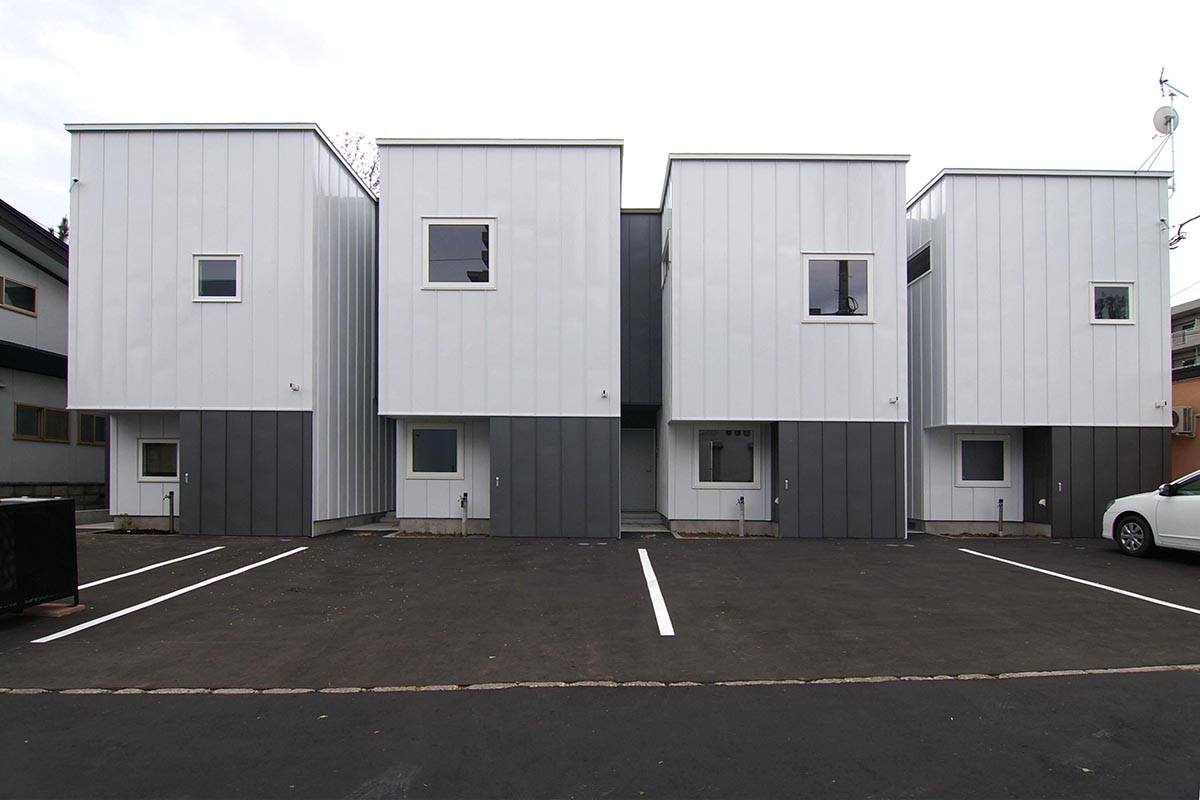
北海道札幌市宮の森に建つ賃貸住宅「宮の森の家」。暮らしの質を高める空間を考えたデザイン賃貸です。
宮の森の家は、北海道札幌市宮の森に計画した賃貸住宅です。
ATELIER O2が手掛けた賃貸住宅「C-BOX」に続くプロジェクトとして計画されました。
現在の賃貸住宅市場では供給が増え、住まいとしての差別化が難しくなりつつあります。
その中で、この建築では単なる居住スペースではなく、暮らしの質を感じられる住環境を整えることをテーマとしました。
住むための箱としてではなく、日常の時間を豊かにする空間としての賃貸住宅。
その可能性を探る建築です。
“Miyanomori House” is a design rental housing project in Sapporo that explores a richer living environment beyond conventional rental apartments.
Miyanomori House is a rental housing project located in the Miyanomori district of Sapporo, Hokkaido.
It follows the earlier rental project “C-BOX,” continuing the exploration of architectural possibilities in rental housing.
In today’s housing market, rental apartments are increasingly abundant, making differentiation more challenging.
This project therefore focuses on creating living spaces that offer more than simple accommodation.
The design seeks to enhance the everyday living experience through carefully considered spatial qualities.
Rather than being merely a container for living, the building explores the potential of rental housing as a place that enriches daily life.


敷地は宮の森。
数年前に設計した賃貸住宅「C-BOX」に続くプロジェクトである。
賃貸住宅が数多く建ち並ぶエリアにおいて、
単に住戸数を確保するだけでは選ばれる理由にはならない。
これからの賃貸住宅に求められるのは、
“価格競争”ではなく“価値の提示”であると考えた。
本計画では、賃貸でありながら
分譲住宅のような落ち着きと質感を持たせ、
さらにデザイン性とわずかな遊び心を加えることで
他物件との差別化を図っている。
日常に少しの高揚感を与える空間構成。
素材や光の扱いによる上質さ。
それらが結果として賃料にも反映されるよう、
デザインと事業性の両立を目指した賃貸住宅である。
The site is in Miyanomori, succeeding the earlier rental project, C-BOX.
In a market where rental housing is abundant, simply providing units is no longer enough to stand out.
The challenge is not price competition, but value creation.
This project reconsiders what rental housing can be.
Rather than adopting the typical image of an apartment building,
the design seeks to create an atmosphere closer to that of a private residence—
calm, refined, and carefully detailed.
By incorporating strong design elements and a subtle sense of playfulness,
the building establishes a distinct identity among surrounding properties.
Thoughtful spatial composition, material selection, and the handling of light
introduce a quiet sense of elevation to everyday living.
Through this approach, the project aims to achieve both architectural quality and economic viability—
allowing design value to translate into rental value.