住まい
2026.02.24
2015-むこう空の家
住まい
2026.02.19
2012-WHITE BIRCH
商業・サービス施設
2026.02.16
2007-当麻歯科診療所


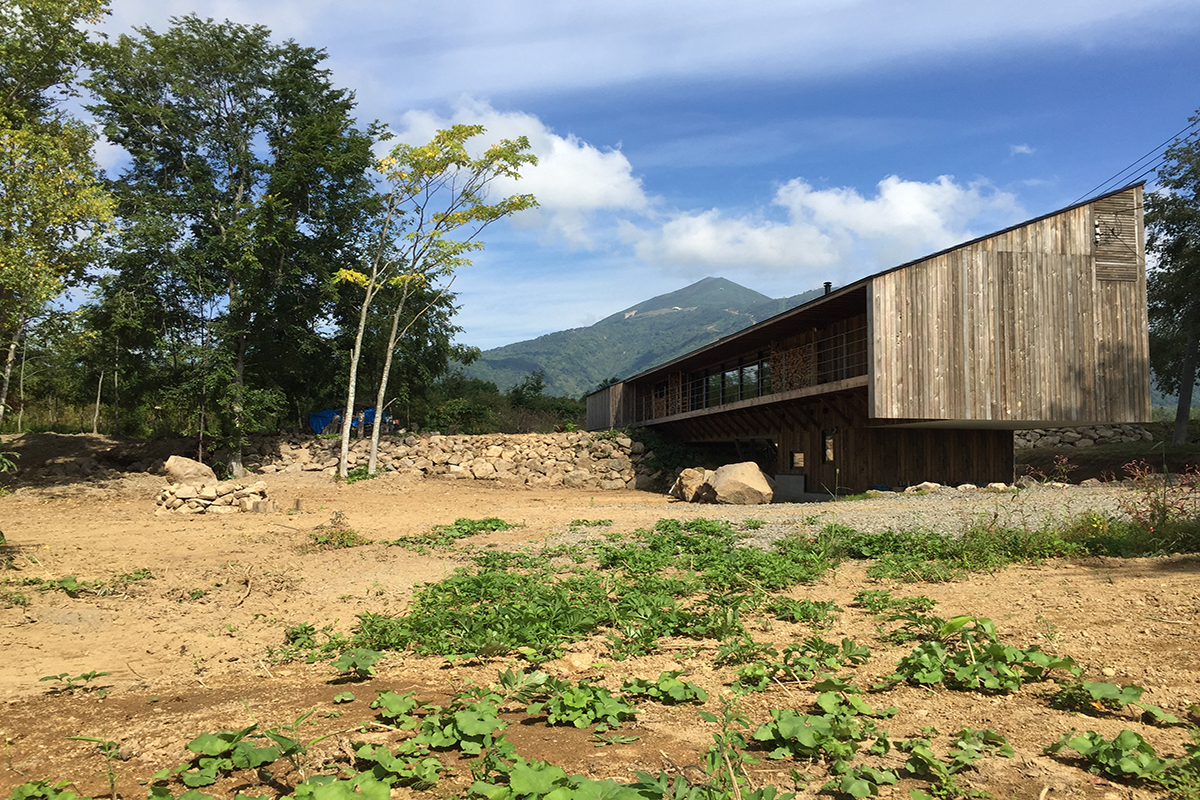
雪と風に導かれた、ニセコの建築。
敷地は豪雪地・ニセコ。
年間積雪量は約1000cmに及び、冬には1階部分がほぼ雪に埋まる環境です。
一年を通してこの地に通い続ける中で、
卓越風の向き、芽吹きと繁茂を繰り返す緑、草花の表情、
そして雪が描く地表の輪郭が、静かに語りかけてきました。
建築は主張するものではなく、
この場所にあるべき姿を読み解くことから始まります。
Guided by snow and wind — a house in Niseko.
The site is located in Niseko, one of Japan’s heaviest snowfall regions, with an annual accumulation of approximately 10 meters.
During winter, the first floor is almost entirely buried in snow.
By visiting the site throughout the year, we began to understand its quiet language—
the prevailing winds, the lush greenery, seasonal wildflowers, and the ever-shifting presence of snow.
These natural phenomena gently revealed what kind of architecture truly belongs here.
Rather than imposing form, we sought to listen.


敷地に広がる小さな森に向かって大きく開口を設け、
内部と自然が連続する構成としました。
卓越風に対しては軒を低く差し出し、
風を翼のように受け流す断面形状としています。
過酷な自然を遮断するのではなく、力を受け止め、受け流す建築です。
さらに、雪と草花によって変化する“グランドライン”を体験するため、
潮の満ち引きのように移ろう地表の高さを楽しめる桟橋状のデッキを設けました。
冬は雪原に浮かび、春から夏は草花の上に伸びる。
ニセコという豪雪地の風土を読み解き、
自然現象を前提として構成することで、
この場所にあるべき必然の建築が生まれたと考えています。
A generous opening faces the small forest that spreads across the site, creating a strong visual and spatial connection to nature.
Responding to the prevailing winds, the eaves are lowered and shaped to deflect airflow like wings, allowing the building to receive and release natural forces rather than resist them.
To engage with the changing ground plane—shaped by snow in winter and grasses in summer—we introduced a pier-like deck.
Like the ebb and flow of the tide, the shifting “ground line” becomes an experience:
floating above snowfields in winter, extending over wildflowers in warmer seasons.
By carefully reading the climate and landscape of Niseko,
the architecture emerges not as an object placed on the land,
but as a necessary presence—
a form that could exist nowhere else but here.