商業・サービス施設
2026.02.03
2025-なごみ薬局・カフェここに
北海道移住
2025.12.29
2022-サンの家
リノベーション
2025.12.29
2018-le jardin


境界にそっと屋根をかける
敷地は、街と森の境目。
さらに丘の中腹という、恵まれた環境にあります。
間口約18m、奥行き約80mという細長い敷地は、
建物を“置く”というよりも、
この境界を壊さずにどう受け止めるかが問われる場所でした。
そこで考えたのは、
地面の上に建物を建てるのではなく、
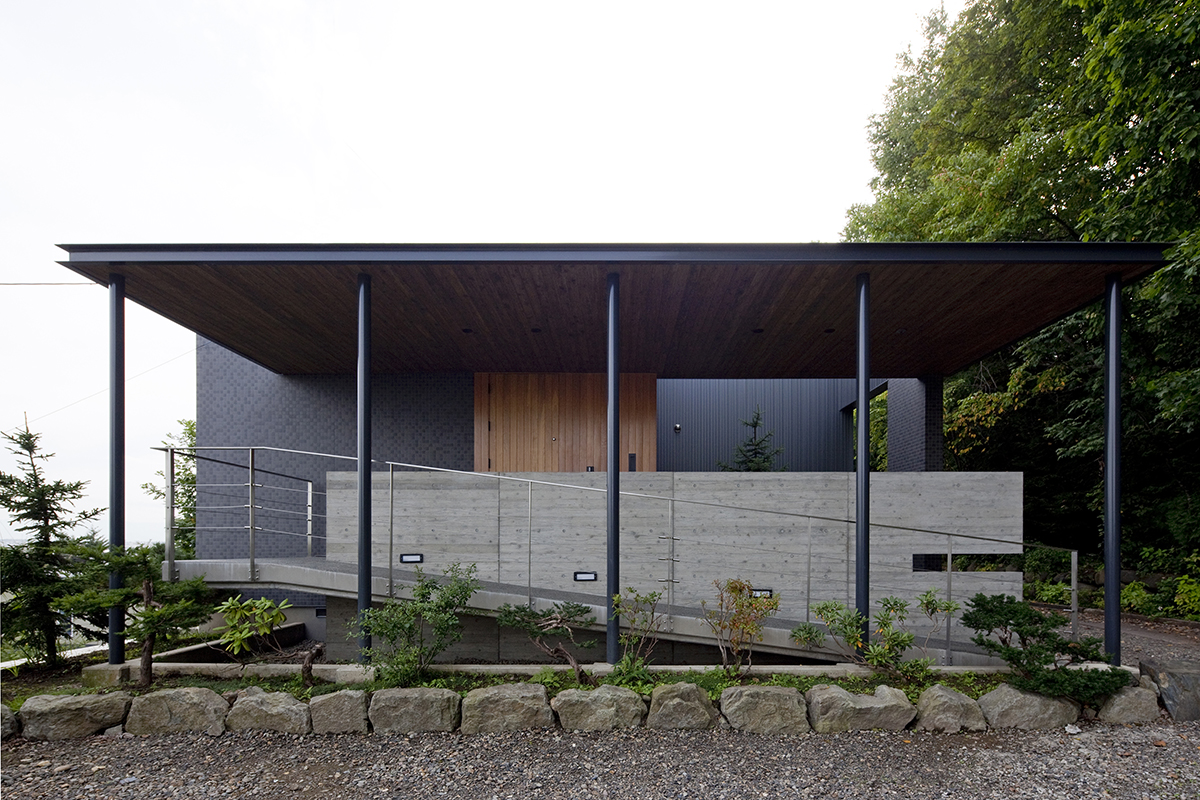
もともとの風景に「床と屋根をそっとかける」ような構成です。
Laying a roof softly at the edge.
The site sits at the edge between town and forest, halfway up a hill — a truly unique location.
With a frontage of approximately 18 meters and a depth of 80 meters, the elongated shape challenged us to rethink how to build here.
Rather than placing a building onto the land, we sought to preserve the boundary itself — as if gently laying only a floor and a roof over the existing landscape.
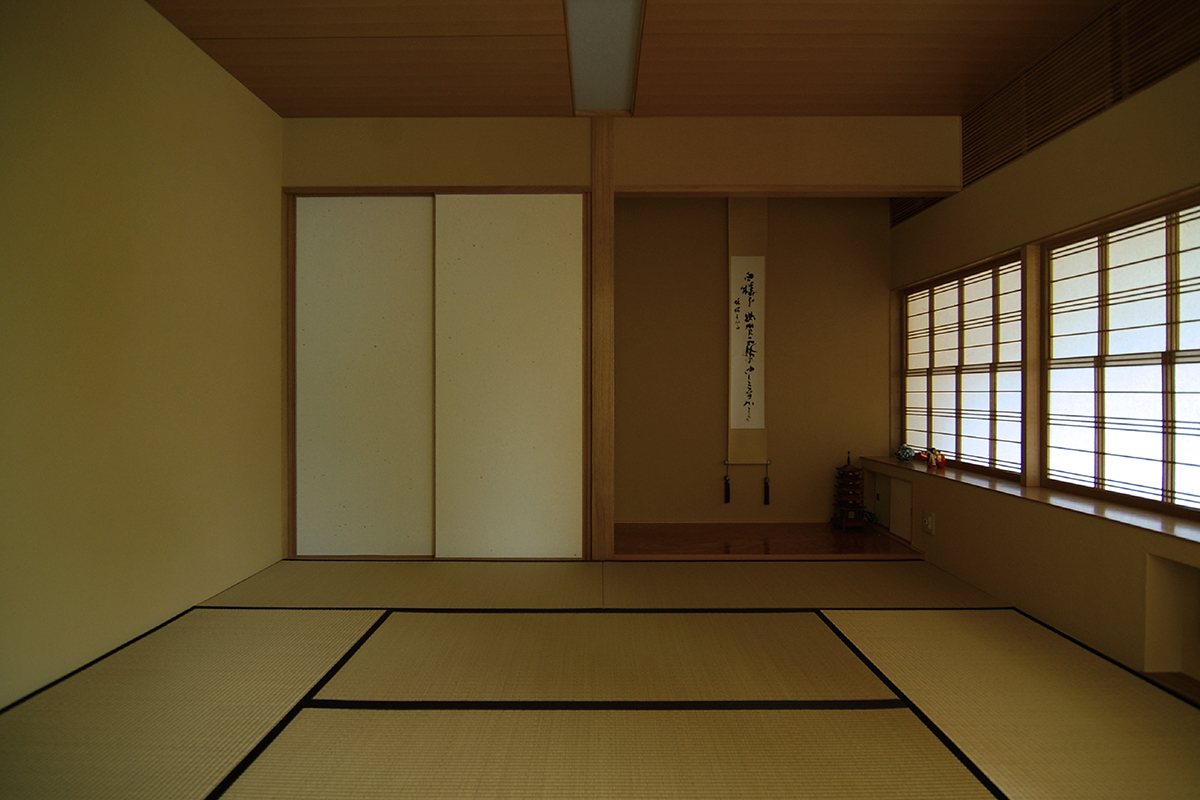
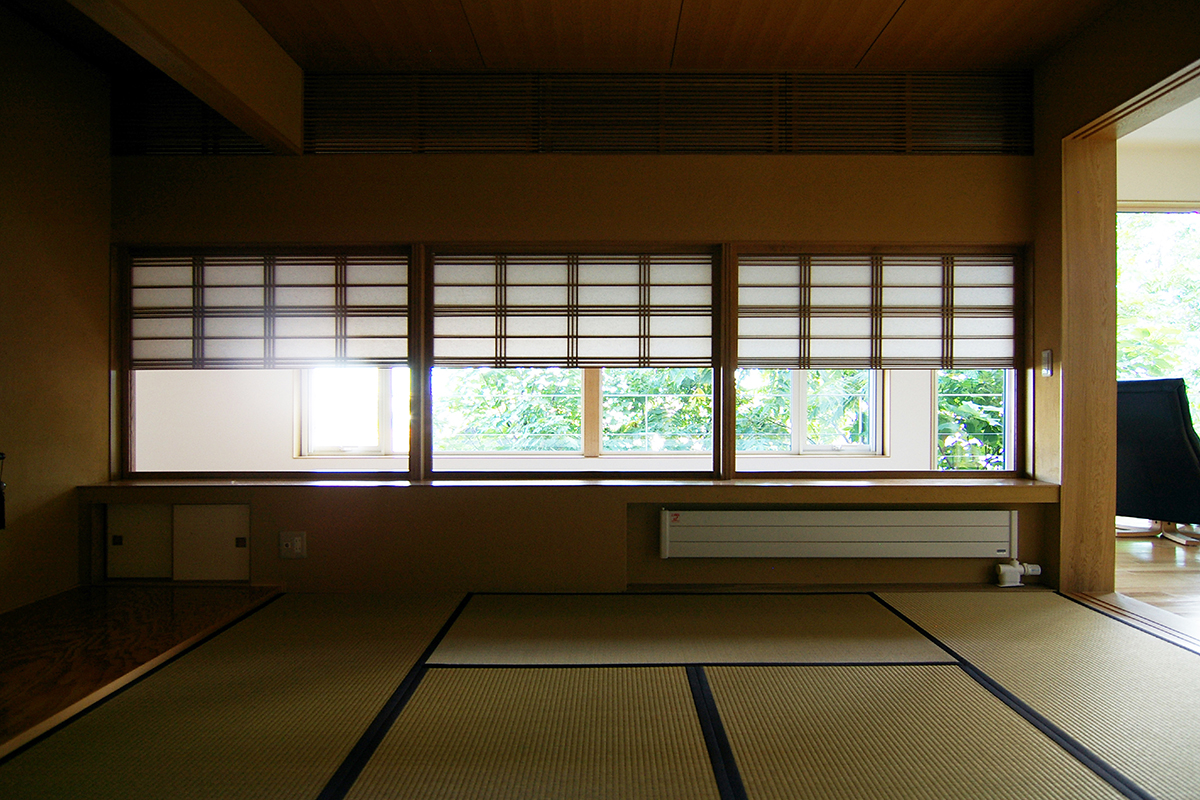
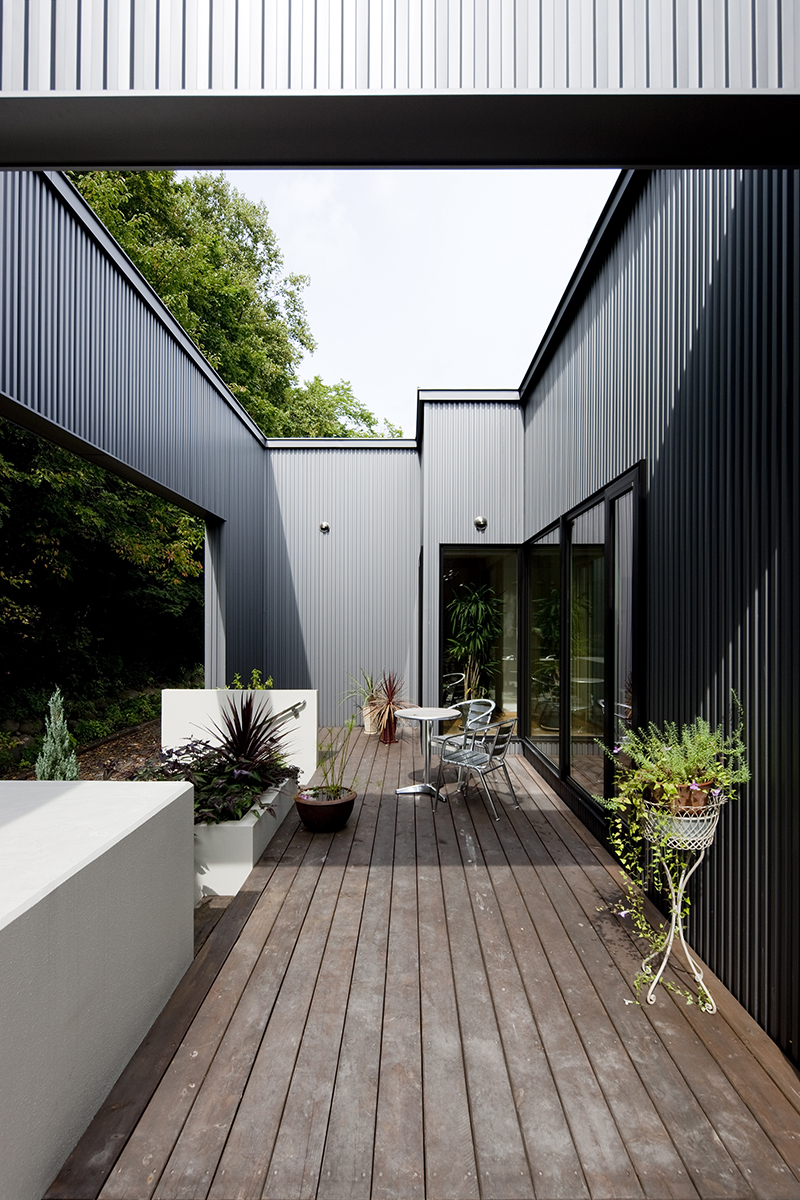
1|敷地の感覚をそのまま残す構成
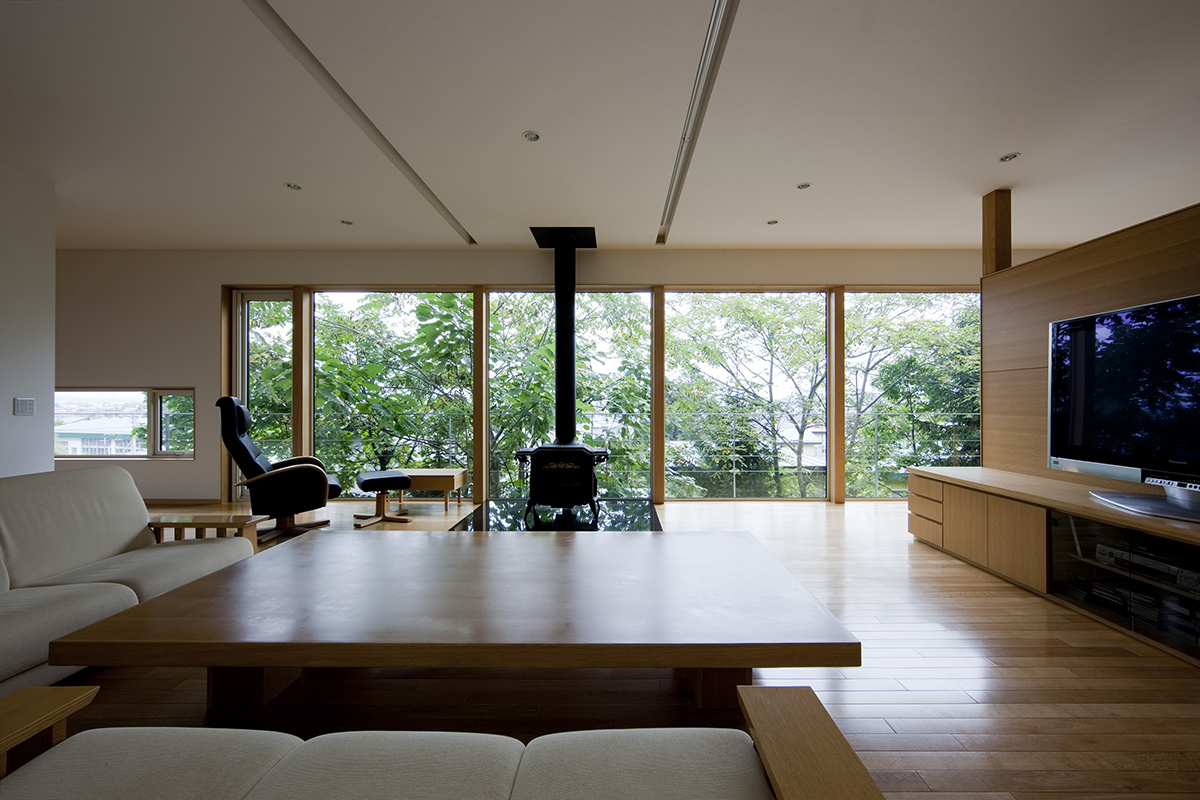
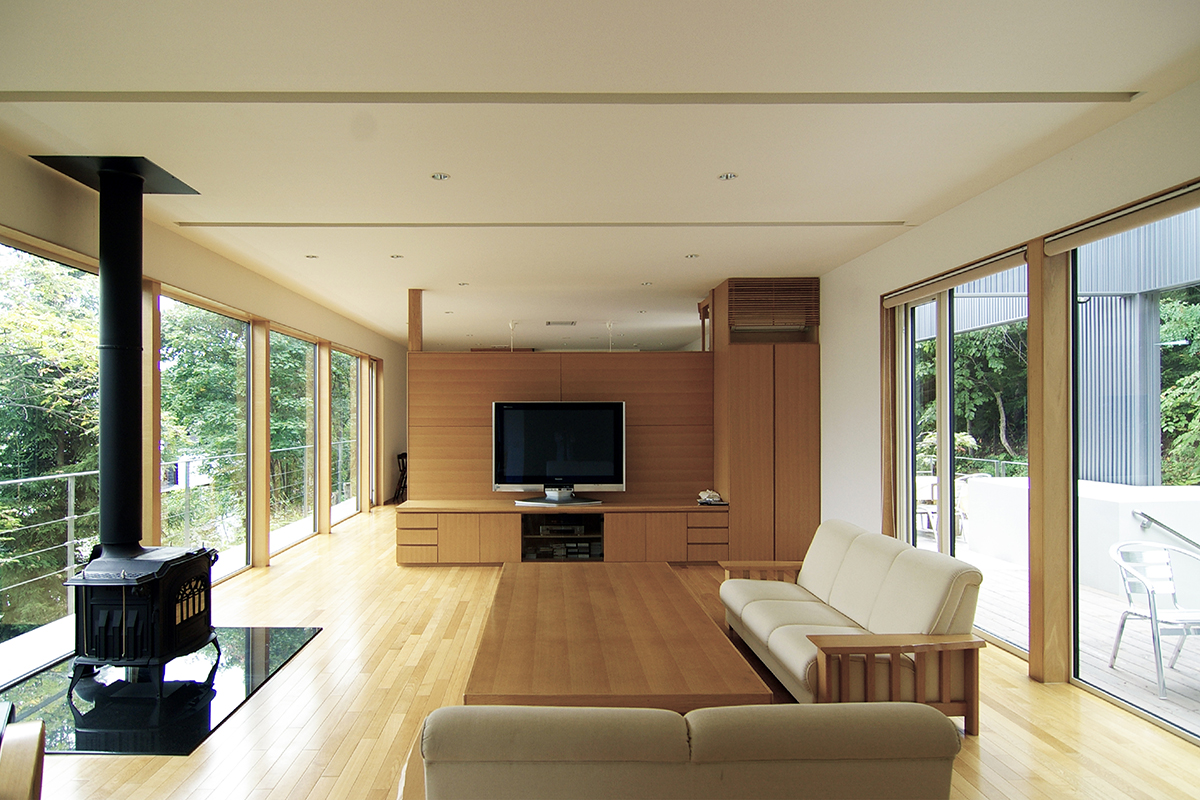
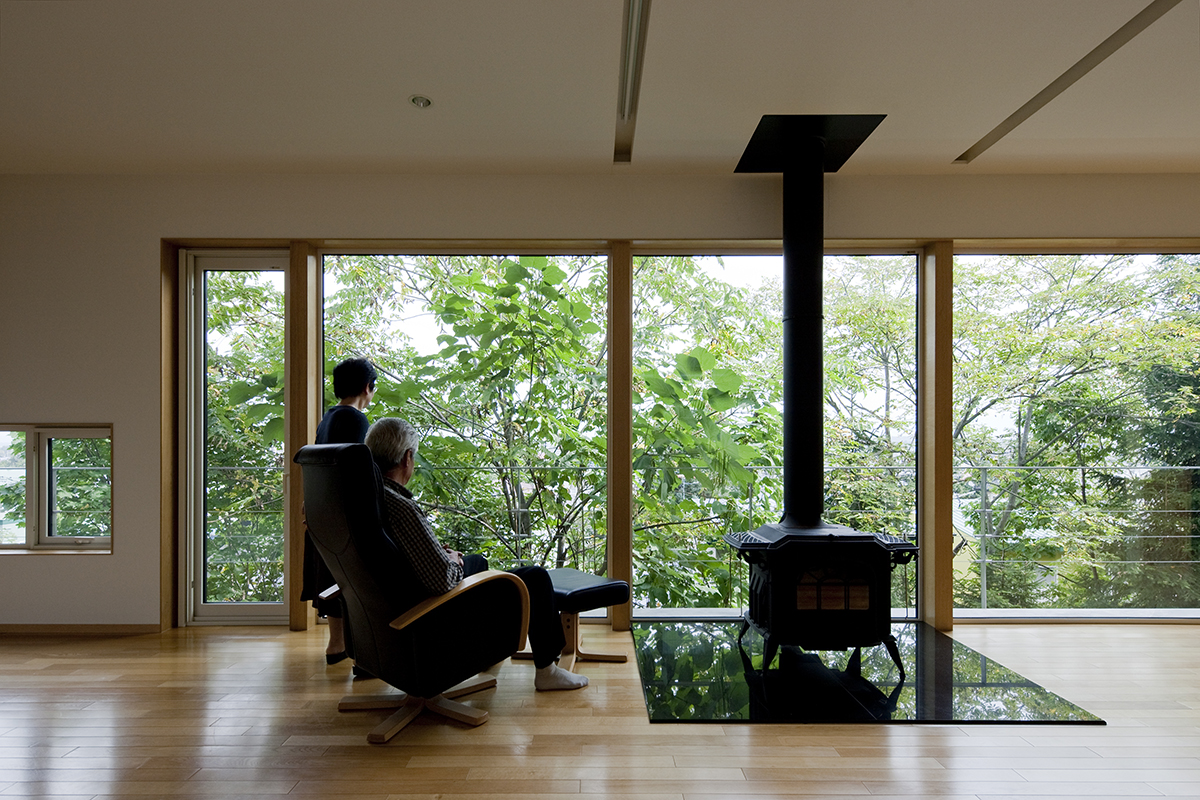
居間にいるとき、まるで元々の地面に直接座っているような感覚が残るように計画しました。
建物が自然を囲い込むのではなく、自然の中に最小限の構造を挿入するよう考えた。
2|外部がインテリアになる空間
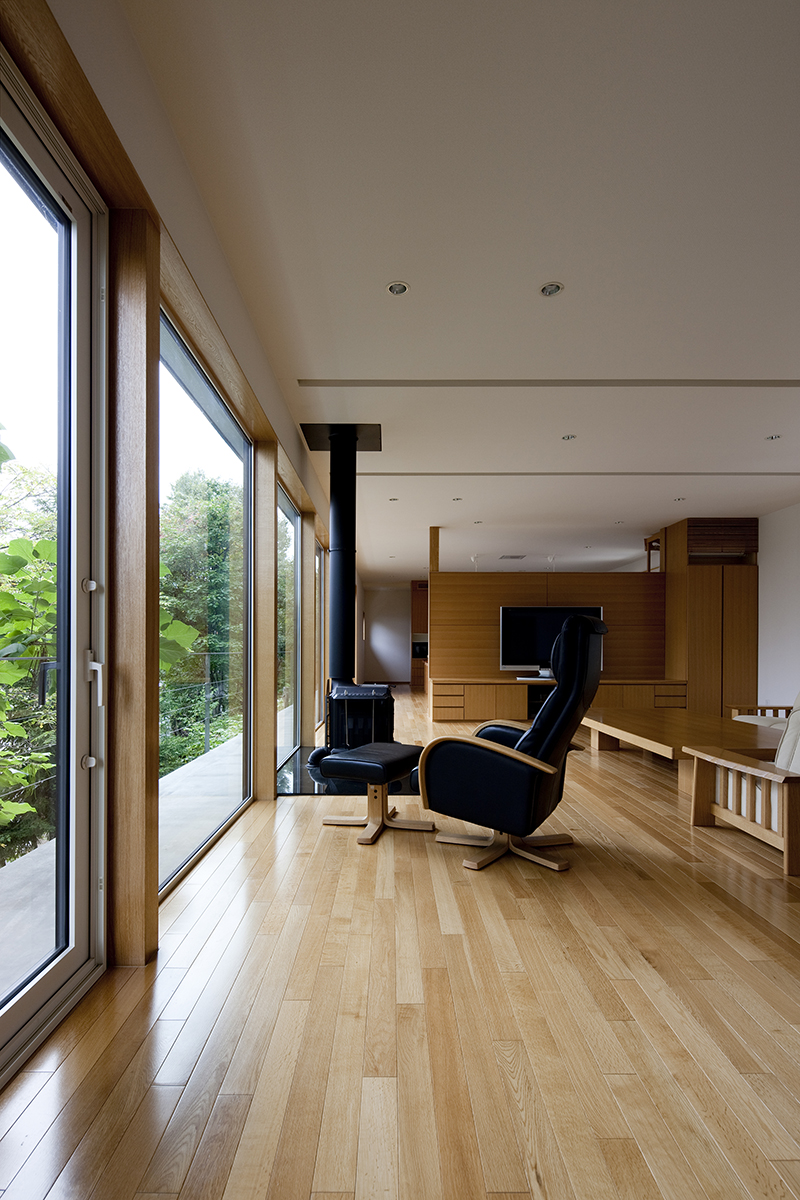
室内はできるだけ控えめに設え、外の景色そのものがインテリアになるように構成しています。
サッシは既製品を採用していますが、納まりを丁寧に検討することで既製品の印象を弱め、空間に馴染むよう工夫しました。
3|性能の底上げ
ペアガラスLow-eでは断熱性能が十分とは言えないため、中空層にガスを封入し、トリプルガラスに近い性能を確保しています。
北海道という環境を前提に、見えない部分の性能にも配慮しています。
4|森と歩調を合わせる素材の使い方
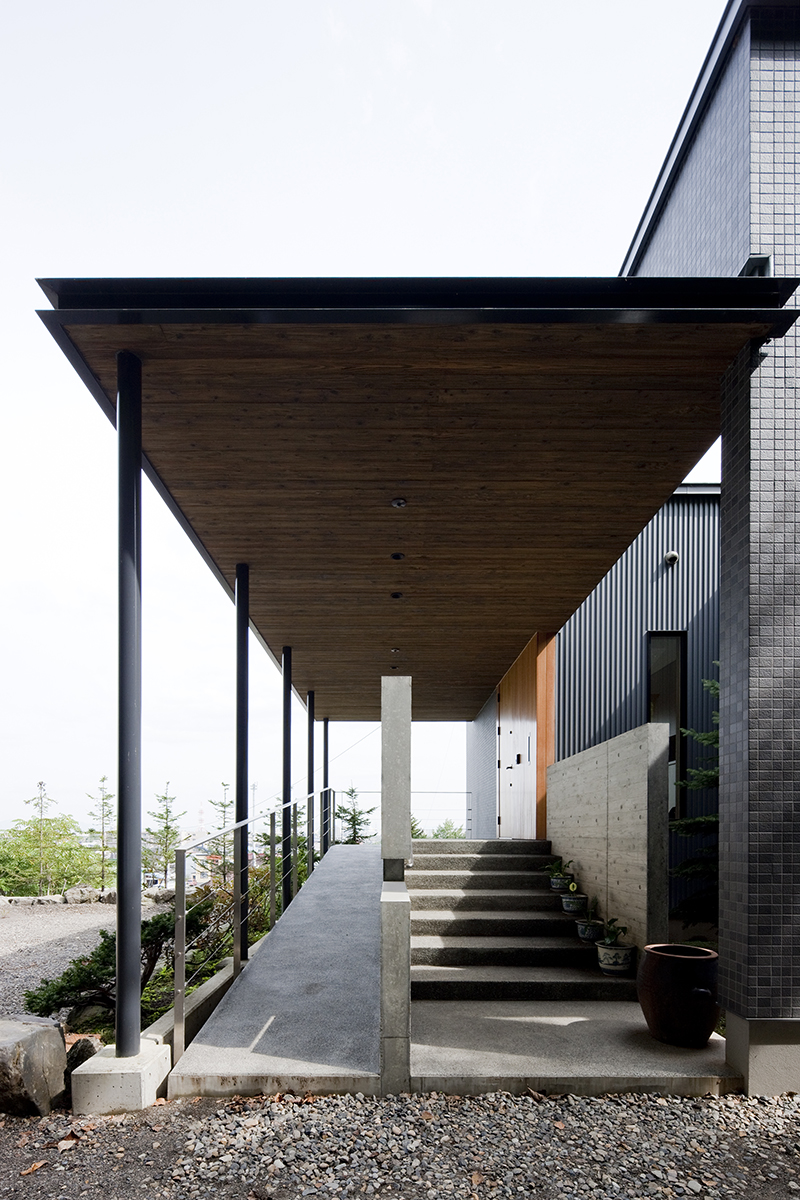
アプローチの軒天井には羽目板を使用。
森のリズムと呼応するような表情を持たせました。
この羽目板は、東京で一度型枠として使用したものを再利用し、表面を際研磨して仕上げています。
さらに、アプローチのコンクリート壁も同じ羽目板型枠を使い板目を写し取り、無機質になりがちなコンクリートに森と響き合う表情を与えました。
5|期待感をつくる動線
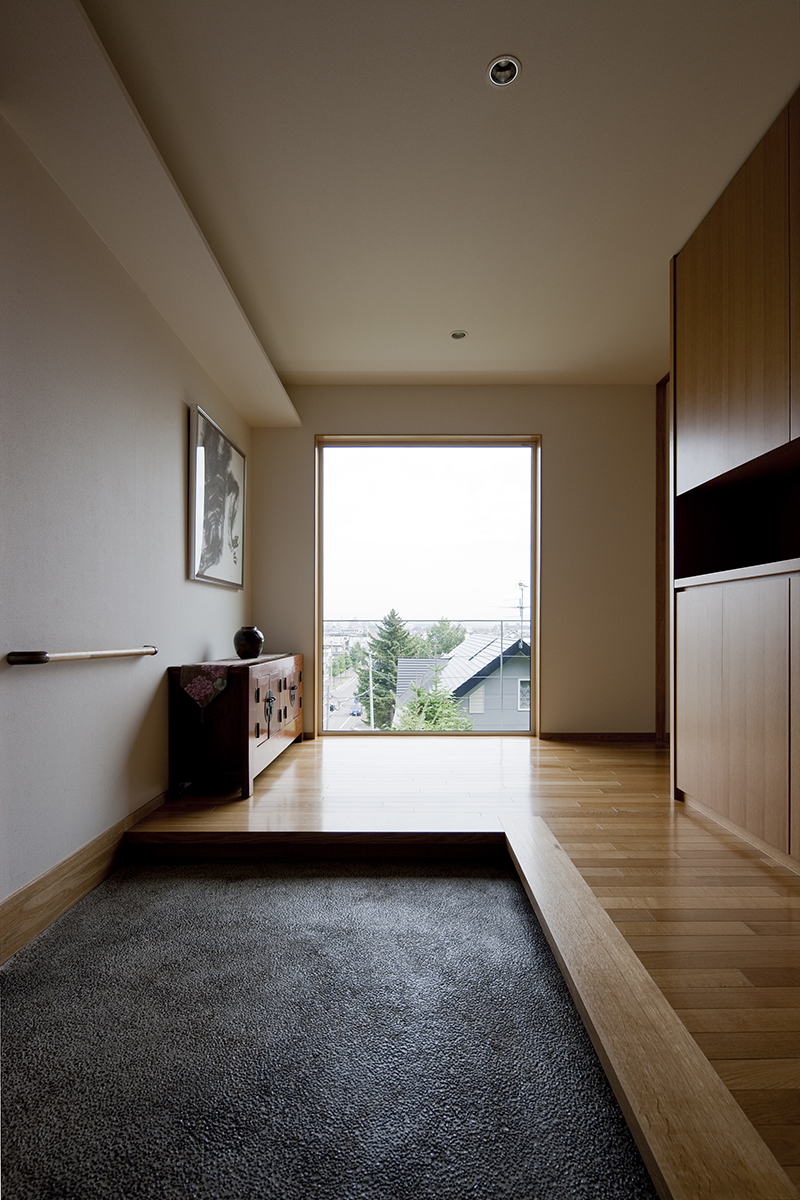
ポーチをくぐり玄関へ。
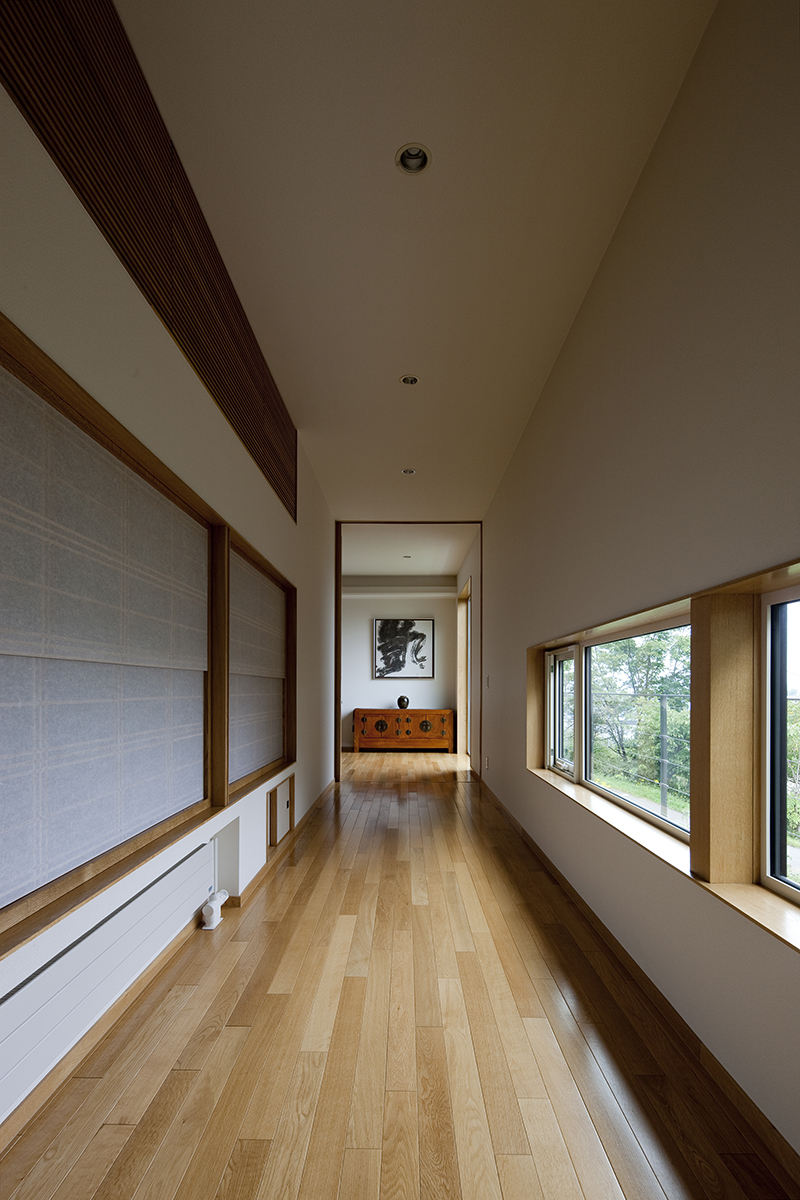
そこから居間へ導く通路は、あえて「引き」をつくっています。
視界を少し抑えながら進むことで、奥に広がる景色への期待感を高める構成です。
居間と食堂・台所は完全に分断せず、天井を連続させることで広がりを感じられる空間としました。
Preserving the Sensation of the Land
The living room was designed so that one feels as if sitting directly on the original ground of the site.
Instead of enclosing nature, the architecture acts as a minimal intervention within it.
Letting the Landscape Become the Interior
The interior is intentionally restrained, allowing the surrounding scenery to function as the primary visual element.
Although standard window systems were used for budget reasons, careful detailing ensures they do not appear generic.
To enhance thermal performance, inert gas was injected into the cavity of the Low-E double glazing, achieving insulation close to triple glazing standards — an important consideration in Hokkaido’s climate.
Material Strategy and Reuse
The approach ceiling is finished with wooden boards that echo the rhythm of the forest.
These boards were previously used as concrete formwork in Tokyo, then carefully refinished and reused.
The same boards were used again as formwork for the concrete walls of the approach, imprinting a wood grain texture and softening the otherwise inorganic surface.
Creating Anticipation Through Movement
Passing through the porch, one enters the house.
The corridor leading to the living room intentionally holds back the view, heightening anticipation of the landscape beyond.
The dining and kitchen areas are not fully enclosed from the living room;
instead, a continuous ceiling connects the spaces, creating a sense of openness and flow.