住まい
2026.02.19
2012-DOUBLE COURT
リノベーション
2025.12.29
2019-la qualite
商業・サービス施設
2025.12.29
2023-sabrina hair


公園の緑と共に暮らす札幌版次世代住宅
北側の緑豊かな公園に面した住まい
この住宅は、敷地の北側に広がる美しい公園に面しており、四季折々の自然を楽しめるように考えました。特に春には新緑が美しく、夏には木々からの気化熱で涼しい森からの空気と青々とした緑、秋には色鮮やかな紅葉、冬には雪化粧した幻想的な風景が広がります。
南側には古い住宅街が広がっています、北側の庭に十分な光が差し込むように建物を南に寄せ、光の入り方をシミュレーションしながら、最適な建物の形態を決定しました。
A Next-Generation Home Living with Sapporo’s Nature
A Home Facing a Lush Green Park on the North Side
This residence faces a beautiful park that stretches across the northern side of the site, designed to embrace the ever-changing beauty of nature throughout the seasons. In spring, fresh greenery flourishes; in summer, the cooling effect of evaporating moisture from the trees brings refreshing air and lush scenery. Autumn offers a vibrant display of colorful foliage, while winter transforms the landscape into a magical, snow-covered scene.
To the south lies an old residential neighborhood. To ensure ample natural light reaches the northern garden, the building was positioned toward the south. Extensive simulations of sunlight patterns were conducted to determine the optimal architectural form.


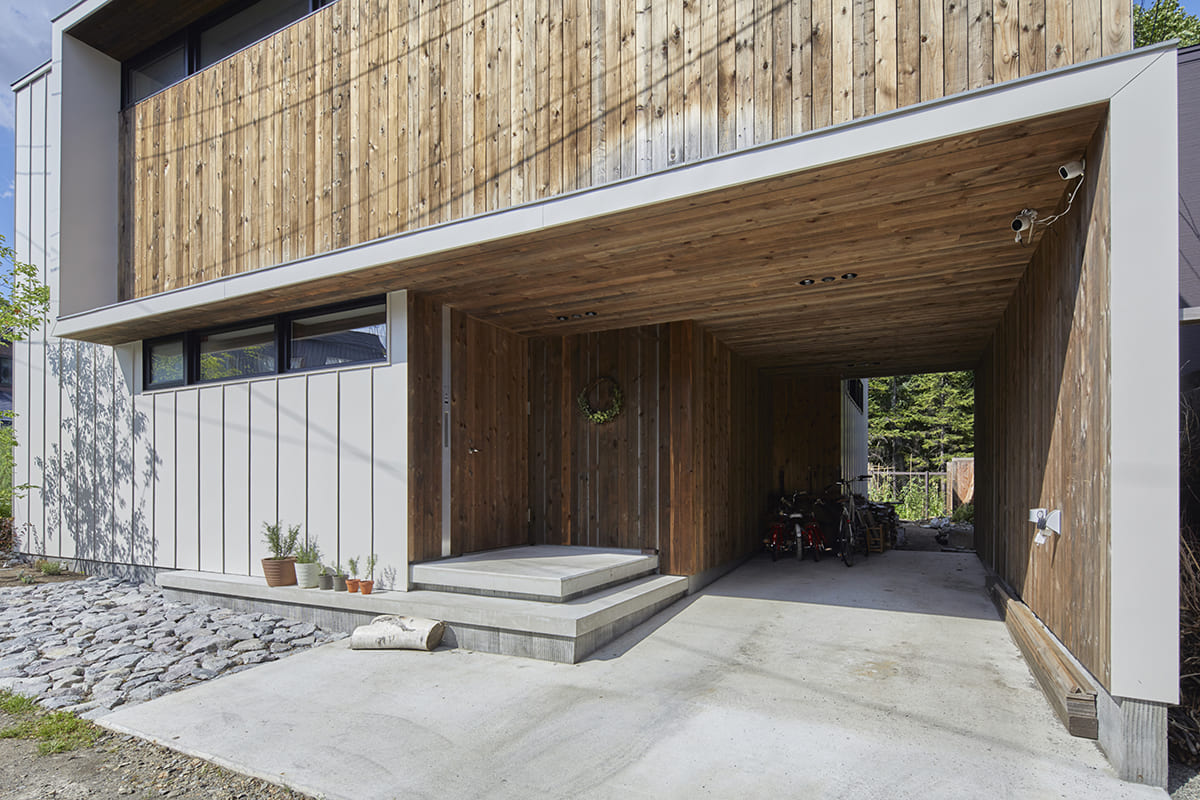


光と熱環境を考慮した建物デザイン・テラスと室内を一体化するコンクリート土間
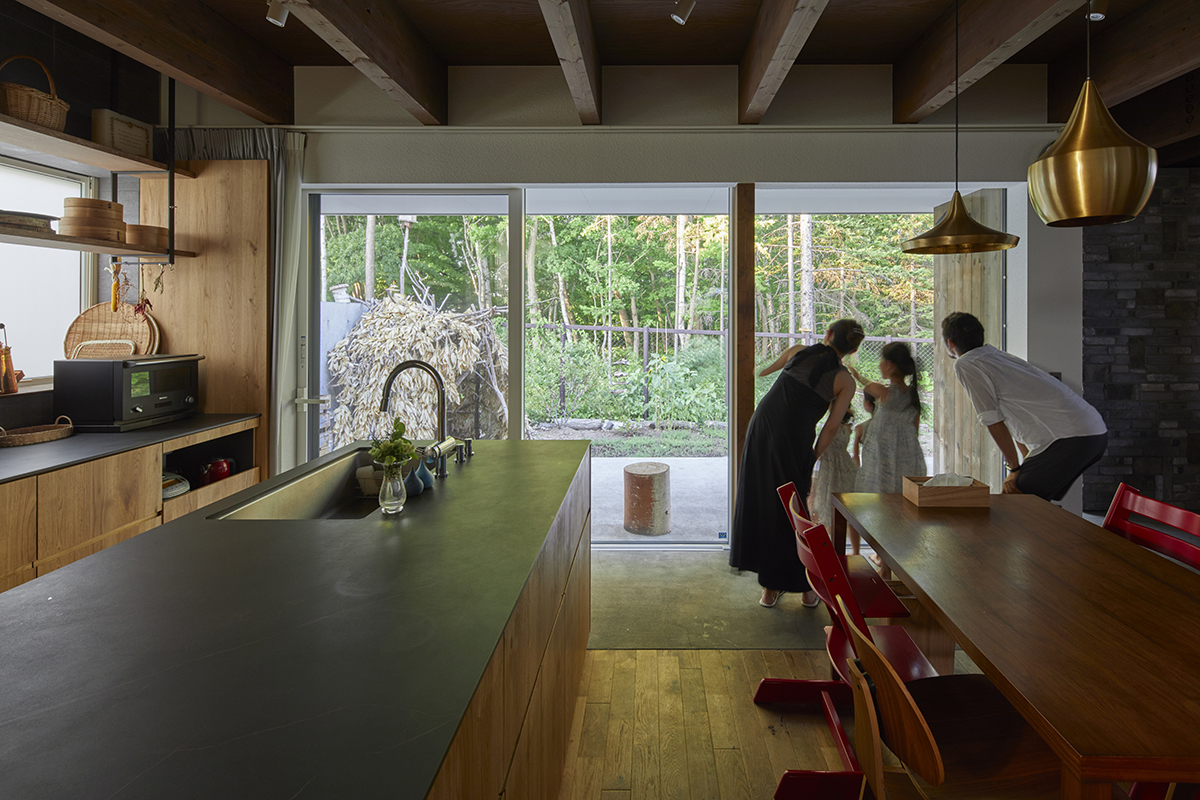
1階には主要な居室を配置し、テラスのコンクリート土間を室内まで延ばすことで、内外の境界を曖昧にしつつ、素材の持つ特性を活かした快適な住空間を創り出しました。コンクリートは熱容量が高いため、冬場は蓄熱させることで暖かさを維持し、夏場は日射を与えない事で室内温度を一定に保つ様にしています。このように室内外の境界を曖昧にさせる材料だけではなく、温熱環境に寄与させる材料としても考えています。
公園の緑を最大限に生かす北側の大開口
この住宅の魅力の一つは、北側に大きく開かれた窓です。住人は落ち着いた光の中で、まるで劇場の観客のように、スポットライトのような日差しを浴びる樹木を眺めることができます。都市部でありながら、森の中で暮らすかのような感覚を味わうことができる様に考えました。
ただし、北側に大きな窓を配置することは冬の寒さの影響を受けやすくなるため、建物全体の断熱性能を高め快適な室内環境となる様に設計しています。結果として、北海道の気候にも適応した札幌版次世代住宅が完成しました。
住まいと自然が共生する環境設計
この住宅では、住空間と自然環境の接点を大切にしながら、日常の暮らしがより豊かになるよう設計しています。外部の景観を取り込みながらも、プライバシーを確保し、心地よい住環境を実現しました。
また、環境に応じた設計の工夫を積み重ねることで、省エネルギー性を高め、持続可能な住まいとしての機能も兼ね備えた、住空間を提案した住宅です。
Building Design Considering Light and Thermal Environment ・ Integrating Terrace and Interior with a Concrete Floor
The main living spaces are located on the first floor, where the concrete terrace floor extends seamlessly into the interior, blurring the boundary between indoors and outdoors while maximizing the material's inherent properties to create a comfortable living environment. Due to its high thermal mass, the concrete absorbs and retains heat during winter, helping to maintain warmth, while in summer, it remains shaded to keep indoor temperatures stable. In this way, the material not only serves to dissolve spatial boundaries but also plays a crucial role in regulating the thermal environment.
Expansive North-Facing Openings to Maximize the Park’s Lush Greenery
One of the defining features of this residence is its large north-facing windows, designed to fully embrace the lush greenery of the adjacent park. Residents can enjoy a serene ambiance, gazing at trees illuminated by sunlight like actors on a stage, while they themselves remain in soft, diffused light—an experience reminiscent of a theater audience. Although located in an urban setting, the home creates the sensation of living amidst a forest.
However, large north-facing openings can make interiors more susceptible to winter’s cold. To counter this, the building has been designed with enhanced insulation, ensuring a comfortable indoor environment throughout the year. As a result, this home embodies a next-generation architectural approach tailored to the climate of Hokkaido.
Environmental Design for Harmonious Living with Nature
This house is designed with a focus on the connection between the living space and the natural environment, enhancing daily life. While incorporating the external landscape, privacy is maintained, creating a comfortable living environment. Additionally, through a series of design considerations tailored to the environment, energy efficiency is improved, making the home not only sustainable but also functional as a living space.